Teaching students to be Leaders

Growing Leaders from Within: The Power of the Junior Knesset

In the bustling halls of our school, a group of young leaders has emerged, radiating positivity, creativity, and a powerful sense of purpose. These remarkable students are members of our Junior Knesse, a student-led leadership group that is transforming our school  from the inside out.

This year, the Junior Knesset has become more than just a student council. It’s a training ground for leadership, a hub of innovation, and a model of what young people can accomplish when they are given the space and support to lead.

Leading for a Better Tomorrow

One of the most inspiring aspects of the Junior Knesset’s work has been their commitment to environmental sustainability. Students spearheaded campaigns to recycle used markers and batteries—items often overlooked in traditional recycling programs. Their efforts have raised awareness throughout the school and empowered their peers to take small, meaningful steps toward caring for our planet. Through these initiatives, they’re showing that leadership isn’t just about making noise—it’s about making an impact.

Building a Stronger School Community

Leadership also means lifting others up, and the Junior Knesset has done just that. During recess, these young leaders have become mentors and facilitators, organizing sports and games for younger students. Their presence has created a more inclusive and joyful recess environment, where all students feel seen, supported, and encouraged to join in. It’s heartwarming to see how a simple game or shared activity can bridge ages and bring our community closer together.

Igniting a Love of Learning

True leaders inspire a love for learning—and this group has done exactly that. With creative math initiatives, the Junior Knesset has shown that numbers can be fun, collaborative, and exciting. Through their passion and innovation, they’ve helped their peers approach math with curiosity instead of fear.

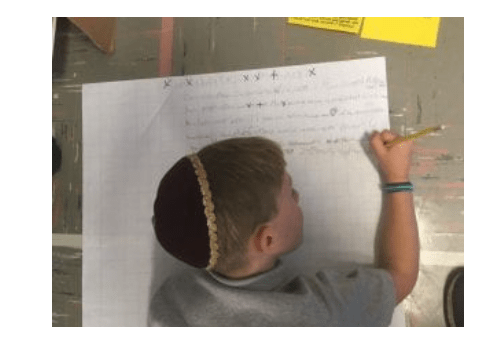
They’ve also led projects around student publishing, teaching others how to express their thoughts and ideas through writing. By helping fellow students find their voices, the Junior Knesset is nurturing not only confidence but also a vibrant culture of creativity and self-expression in our school.

Inspiring on a Global Stage

One milestone was a Livestream event, where Junior Knesset members shared their accomplishments and ideas with a global audience. It was more than just a presentation—it was a celebration of youth leadership and a testament to what’s possible when students are given the tools to dream big and lead boldly. Watching them represent our school on the world stage filled us with pride and reminded us that the future is in very good hands.

A Lasting Legacy

The Junior Knesset isn’t just a student group—it’s a movement. These students have shown that leadership is about action, kindness, and the courage to try something new. They are modeling the kind of community we all strive for—one that is inclusive, proactive, and deeply caring.

As we look to the rest of the school year, one thing is clear: our school is brighter because of them. I am endlessly proud of their achievements and even more excited for what lies ahead. The Junior Knesset is laying the foundation for a new generation of leaders—thoughtful, passionate, and ready to make the world a better place.

For the Love of STEM

Falling in Love with STEM in First Grade

In first grade, something magical happens when you introduce young learners to STEM—Science, Technology, Engineering, and Math. Curiosity sparks. Eyes widen. Tiny hands get busy building, creating, and solving problems. STEM is more than just an acronym—it’s a powerful way to get children engaged and excited about learning.

This year, our class dove into STEM with hearts wide open and minds ready to explore. Two incredible projects helped us see just how meaningful and fun learning can be when we blend STEM with storytelling, creativity, and collaboration.

🦌 Creating Wildlife Crossings: Innovation Inspired by Nature

Our Innovation Day projects were inspired by the thought-provoking book Make Way for Animals! A World of Wildlife Crossings  by Meeg Pincus. A special thank you to our amazing librarian, Brigitte, for recommending this book as the perfect springboard for our STEM adventure.

After reading about wildlife crossings from around the world and how they help animals travel safely across busy roads, our class began to wonder—could we build our own? The students were bursting with excitement and ready to take on the challenge. Each child selected an animal to support and began designing a crossing that would allow their chosen species to cross safely.

The Challenge:
Design and build a wildlife crossing that spans at least 30 cm and supports a weight of 100 grams.

With cardboard, glue, tape, and a whole lot of determination, the children partnered up and got to work. They brainstormed, sketched, built, tested, and redesigned. Our classroom was buzzing with collaboration, creativity, and that wonderful kind of mess that means learning is alive and well. True to our North Star, We Learn Better Together, students helped one another troubleshoot and problem-solve as they worked toward a common goal.

Innovation Day was a huge success! Families were invited to see the finished projects, and the children beamed with pride as they shared their process and final designs. The joy, confidence, and critical thinking on display were incredible to witness.

🐷 STEM Meets Storytelling: The Three Little Pigs Reimagined

After the break, our first graders tackled a new challenge: building windproof houses for the Three Little Pigs—inspired by the book Making a Windproof House for the Three Little Pigs by Sue Gagliardi.


This time, students used engineering principles to design and build houses that could withstand the huffs and puffs of the Big Bad Wolf—simulated by a blow dryer! The room filled with laughter and suspense as we tested each structure. Would the house stand strong or be blown away?

Then, we added a creative twist. Students wrote brand-new endings to the story. What happens when the wolf can’t blow the houses down? The blend of STEM and Language Arts brought out some of the most imaginative, resilient, and joyful work we’ve seen all year.

🗺️ Building, Mapping, and Collaborating in Grade One

In Social Studies, our STEM energy carried over into a community-building project. Students partnered up to create 2D maps and then worked together to build a 3D community. Each student chose a community helper to research and designed the corresponding building—from hospitals to fire stations to post offices. They even created a map key to symbolize their growing community.

Here’s just a glimpse at our mini-city:

Community Helper Community Building
Vet Animal Hospital
Vet Animal Shelter
Postmaster Post Office
Farmer Barn & Farm
Chef & Restaurant Owner Restaurant
Teacher & Principal School & Playground
Policeman Police Station
Firefighter Fire Station
ER Doctor Hospital

This project was all about collaboration—a key first-grade skill. Students practiced patience, problem-solving, and communication as they worked in teams and shared responsibilities. The pride on their faces as they presented their work to the class said it all.

💡 STEM Brings Learning to Life

STEM challenges bring so many learning goals together: critical thinking, creativity, resilience, collaboration, and joy. Whether building animal crossings or windproof houses, our first graders are discovering that learning is hands-on, meaningful, and full of wonder.

As a teacher, I’ve loved every moment of watching them grow—not just in skills, but in confidence. These STEM projects are as fun and rewarding for me as they are for the kids. I can’t wait to see where their curiosity takes them next!

Stay tuned—there’s always a new adventure just around the corner in 1A.

Reading and Writing in First Grade

Making Every Minute Count: Teaching Grade One in a Trilingual School

Teaching two Grade One general studies classes in a trilingual school is both a privilege and a puzzle. With exactly 680 minutes a week per class, I’m responsible for teaching Language Arts, Math, Science, and Social Studies—all while supporting children who are navigating not just one, but three languages.

The question I return to again and again is: how do we get first graders to become readers and writers with so little instructional time?

The answer lies in focus, targeted practice, and the power of research-backed programs.

Assessment and Early Intervention: A Smart Start

To ensure every child gets exactly what they need, our school uses Amplify assessments, based on the DIBELS framework, to guide our reading instruction. These assessments measure:

We conduct three major benchmark assessments each year—in September, January, and June. These provide clear snapshots of student progress and help us track growth over time.

Between these benchmarks, teachers can also use progress monitoring tools up to three times per term. This is especially helpful for students who fall below the benchmark, allowing us to keep a close eye on their progress and adjust instruction in real time.

As early as September, students who need extra support begin working with our reading interventionist. These children receive targeted instruction three times a week, focused on foundational reading skills. This early, proactive approach ensures that every child in the class receives optimal instruction, whether through whole-group teaching, small-group differentiation, or focused intervention.

It’s a carefully balanced system: high expectations, strong routines, real-time data, and targeted support—so that all our students can build the strong foundation they need to become confident readers.

The Science of Reading as Our Foundation

At our school, we’ve made a commitment to teaching reading based on the Science of Reading, which means our instruction is explicit, systematic, and grounded in how the brain learns to read. We use three main programs to guide our practice:

UFLI provides the backbone of our phonics instruction. Each week, I carve out daily blocks of structured literacy time that include phonemic awareness, phonics, high-frequency word instruction, decodable reading, and application in writing. These are short, focused lessons—no fluff, just the essentials, layered day by day.

Boost Reading steps in to personalize the journey. It’s our “silent partner,” giving students just-right practice that builds confidence and fluency. Meanwhile, Amplify gives me the data I need to differentiate with purpose—I know which students need more time with CVC words, who is ready for blends, and who needs targeted support with oral language and comprehension.

Making Time Work: Cross-Curricular Learning

680 minutes sounds like a lot—until you start breaking it down. That’s why every minute matters. I use center-based learning and rotating stations to allow for small-group guided reading and independent literacy practice.

But the biggest secret? Cross-curricular projects.

We bring literacy into math, science, and social studies. Students write observations in science journals, create labeled diagrams, solve word problems by writing number stories, and build social studies booklets that tie into our reading goals. These projects not only maximize instructional time but also spark deep engagement and real-world connections.

Reading Happens at Home Too

One of the most important parts of our literacy program is daily reading homework in all three languages—English, Hebrew, and French. This routine begins in the first few weeks of school, and children quickly settle into it. Every night, they’re practicing what they’ve learned, reinforcing decoding skills, and developing fluency.

In English, students are sent home with decodable books that directly align with their UFLI lessons. This daily practice is essential—it bridges school learning with home reinforcement, allowing students to apply their phonics knowledge in real reading situations.

But what about our fluent readers? Those students who have already mastered the basic decoding skills are encouraged to choose chapter books for homework. These might be early reader series or slightly more advanced novels, depending on the child’s level and interest. This keeps reading meaningful and appropriately challenging, while fostering independence and reading stamina.

The results? They’re amazing.

Children who came into Grade One as beginning readers are suddenly reading with confidence across multiple languages. It’s a powerful reminder that practice, practice, practice—at school and at home—really does pay off.

Writing: Building Stamina and Confidence

Our writing instruction begins the moment students start putting sounds to paper. Because handwriting is introduced in Kindergarten with Handwriting Without Tears, I can focus in Grade One on helping students connect letter formation with sound-symbol knowledge and meaning.

We write every single day—even if it’s only for 10 or 15 minutes. At the start of the year, we focus on simple sentence structure using decodable words. As the year progresses, we introduce shared writing, modeled writing, and scaffolded independent writing. Writing is integrated across subjects, too: a math story problem becomes a writing prompt; a science observation becomes a labeled diagram or descriptive sentence.

Writing: Expression, Creativity, and Purpose

Writing is woven into our daily rhythm, starting with daily journal time. This sacred space allows children to express their thoughts and feelings, while putting all their UFLI phonics lessons into action. It’s where spelling patterns, sentence structure, and personal voice come together naturally.

We also plan strategic story-writing sessions, where students dive into the full writing process—from brainstorming and drafting to revising and sharing. These sessions help them develop as creative storytellers and build stamina, confidence, and pride in their work.

As the year progresses, we gradually introduce genre-based writing instruction to build a wide foundation of skills:

  • A few months into the school year, students take on research-based animal projects. They read, gather facts, and organize their findings into short, informative pieces—often with labeled diagrams and nonfiction text features. 
  • In the middle of the year, procedural writing is introduced through hands-on STEM and science experiments, teaching students how to explain a process step-by-step using sequencing words and clear instructions. 
  • In the final semester, we guide students through narrative writing, letter writing, and opinion writing, giving them new ways to communicate, reflect, and persuade. This gradual progression keeps writing fresh, meaningful, and developmentally aligned. 

Making Time Work: Prioritizing What Matters

680 minutes sounds like a lot—until you start breaking it down. That’s why every minute matters. I use project-based learning and stations to rotate small groups through targeted instruction. While I teach a guided reading group, another group may be working on a writing task, while another is engaged in Boost Reading or word work.

Integration is key. Science and Social Studies are taught through language—we read informational texts, we write about what we observe, we create mini-books, and we use vocabulary in context. These subjects enrich our literacy time rather than compete with it.

Final Thoughts

Teaching in a trilingual school is a gift. Our students are developing their identities across languages, cultures, and disciplines. And while time is tight, structure and intention make it possible to do deep, meaningful work. The Science of Reading has given us the roadmap. Programs like UFLI, Boost, and Amplify have given us the tools. But it’s the daily routines, the careful planning, and the belief in our students’ potential that turn those 680 minutes into a launchpad for lifelong literacy.

 

Reading Matters

Making Reading Fun Throughout the Year

As a Language Arts teacher, one of my most cherished responsibilities is instilling a love of reading in my students. Over the years, I have discovered numerous ways to make reading a fun and magical experience, ensuring that students not only improve their literacy skills but also develop a lifelong passion for books. Here are some of the strategies I use throughout the year to keep the excitement for reading alive in my classroom

 Reading Aloud

No matter the grade level, reading aloud is a cornerstone of my teaching practice. It is a powerful way to model fluent reading, expose students to new vocabulary, and immerse them in the rhythm and cadence of the written word. Each year, I participate in The Global Read Aloud, an initiative that connects students worldwide through shared stories. My students eagerly look forward to our Zoom calls or Padlet discussions with peers from different countries. This global exchange of ideas and interpretations enriches their reading experience and broadens their perspectives.


One particularly heartwarming moment came from my current grade 8 students, who fondly remembered our Global Read Aloud activity from Grade 4. They were so excited to see the sequel to a beloved novel at our school book fair that they pooled their money to buy it for me. Their pride and joy in presenting the book to me was a testament to the lasting impact of our shared reading experiences.

Each year, Brigitte always orders the Global Read Aloud books, ensuring a rich and engaging literary experience for her students. For grades 4-8, the book choices are usually chapter books, perfect for reading a few minutes every day, fostering a consistent and enjoyable reading habit.

                                                                         2023 book selections for grades 2-8

   Reading Buddies

Another cherished activity is our Reading Buddies program, which pairs older students with younger ones. This initiative not only fosters a sense of community and responsibility but also allows older students to act as reading role models. The interactions between the buddies are heartwarming to witness, as they share stories, laughter, and the joy of reading together.

                                                            Book in a Bag Projects

To engage students in reading and sharing their books, we undertake Book in a Bag projects. Each student selects a book, reads it, and then places objects related to the story in a bag. These objects serve as props during their book presentations to the class, sparking curiosity and discussion among their peers. This hands-on approach makes the storytelling process interactive and memorable.

                                                           Reading in Grade One

Grade one is a pivotal time in a child’s reading journey, and focusing on reading has always been a passion of mine. This year, using the Amplify assessment program has transformed how I monitor and support each student’s reading journey. From the very beginning, Amplify’s benchmark and progress assessments have been invaluable tools, allowing me to keep a close eye on every child’s strengths and challenges.

Amplify’s system places students into appropriate reading levels and offers various activities, lessons, and reading passages tailored to enhance specific skills. This customization is essential, ensuring each child receives the right support and challenge. The progress graphs that Amplify generates are particularly impressive. They visually depict a child’s advancement in various reading areas, providing a clear and comprehensive picture of their growth.

During parent-teacher interviews, these graphs become powerful artifacts. Sharing them with parents offers concrete evidence of their child’s progress, making the reading development journey transparent and collaborative. Parents appreciate seeing the data, as it highlights how much their child has improved and where they still need to grow. It turns abstract progress into something tangible and understandable.

The online Amplify system is remarkably user-friendly. It meticulously tracks each mistake a student makes during assessments throughout the year. This level of detail allows me to identify specific patterns and areas where support is needed, so I can tailor my instruction accordingly. I’m continually amazed at the volume and quality of activities and reading materials Amplify provides. There are many reading passages to print and use, ensuring my lessons remain fresh and engaging.

I hope the lower grades will continue using this assessment program next year. I am eager to do a deep dive into the customized reading goals for each student, as I believe this will further enhance our ability to support every young reader effectively. Amplify has not only streamlined the assessment process but also enriched our reading curriculum, making a significant difference in how we teach and our students learn.

Amplify assessment is also a powerful tool for older students who get resource support.

                                                  Adding a Touch of Magic

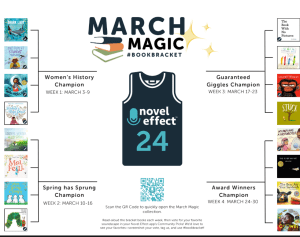
Always on the lookout for innovative ways to make reading magical, I introduced Novel Effect to my classroom this year. This app adds soundscapes to stories, creating an immersive reading experience. I was thrilled to be asked to serve as an ambassador for Novel Effect, which provided me with a free year’s subscription and access to an online community of educators. This community inspired us to participate in the March Magic book bracket, a global event where students read and voted on their favorite books. The excitement and engagement this activity generated were truly phenomenal. * I have the free app for the upcoming school year. I will be happy to visit classes to share the Novel Effect magic.


                                               Brigitte’s Summer Reading Challenge

To maintain students’ interest and engagement in reading over the summer, our school has implemented Brigitte’s Summer Reading Challenge. This program is especially important for students who struggle with reading, as it helps prevent the “summer slide” and keeps their skills sharp. The challenge encourages students to read a certain number of books over the summer, with incentives such as prizes for those who meet their goals.

Incorporating fun and motivating elements, the summer reading challenge makes reading a part of students’ daily routines even when school is out. Whether it’s through reading logs, book reviews, or creative projects, the challenge offers various ways for students to engage with their books and share their experiences. Prizes, ranging from small trinkets to larger rewards like gift cards or a special recognition ceremony, add an extra layer of motivation.

                                                               The Joy of Reading

Making reading fun throughout the year is a journey filled with creativity, connection, and joy. Whether through reading aloud, global collaborations, creative projects, innovative apps, or advanced assessment tools like Amplify, my goal is to create an environment where students look forward to reading and see it as an adventure. The smiles on their faces, the excitement in their voices, and the pride in their achievements are the greatest rewards for me as a teacher. Here’s to many more years of joyful reading adventures.


                                                    Reading with Puppies

                                                                A dream prototype for OJCS!

Just imagine if we had such a program at OJCS. I believe our reading scores would improve tremendously. We should have tried this before all the renovations.

Documenting Learning For Silvia

In the Fall of 2018, our school launched class blogs. Each grade shared class happenings and updates on the class blog. Our school also launched a consultancy with Silvia Tolisano at the same time. Her book Documenting the Learning, co-written with Janet Hale, is an extensive guide on how to make learning visible, meaningful, and shareable through blogfolios. A cohort of teachers spent time with Silvia learning how to capture and document student learning through their blogs. 

This cohort quickly became blogging experts and shared their learning with the rest of the teachers on staff. In January, I was fortunate to welcome Silvia and the cohort of teachers into my classroom. I had the opportunity to watch how they documented the learning happening in my Grade 3 class.

 The amount of information and insight gained into my students’ learning in just one lesson was amazing.

  Take a look at the Blog Posts Below

Bethany

Ann-Lynn

Josh

Chelsea

Keren

Melissa

Shira

In July 2019,  Silvia Tolisano was a presenter at the conference, and my colleague Lianna Krantzberg and I attended her workshop on Digital portfolios and Documenting learning. She suggested that if teachers want their students to use blogs to document their learning. The teachers should document their learning through a blog. This statement got me thinking. My colleague, Lianna started a professional blog at the airport on the way home from the conference. A week later, my colleague Josh Ray convinced me to start my blog. It has been instrumental in reflecting on my learning and growth as a teacher. Silvia was our positive mentor, cheering us on from the sidelines. She answered all our questions and got us to share our learning through our blogs. 

 I have launched student blogfolios with my classes over the last three years. The students enjoyed documenting their learning. Silvia was right! I have seen firsthand how students step up their game and write more, care more, and take more pride in their work using blogfolios. They love the idea that more people will read their work rather than just their teacher. I get it, as I feel the same way about my professional blog. I choose my words carefully and put more care into my work.

I know the students take ownership of their work. Blogfolios are the places students can ponder questions, record reflections, and talk about what they learned during the process. Of course, it will also be the spot to showcase final projects, writing, and activities.

This platform lets teachers personalize learning and enrich students. The beauty of writing posts, making videos, and taking pictures, is that students will be in charge of how far to take their learning. It will help us hit some of our school’s north stars.

Students learn more when they think and reflect on their work. I read so much these days about digital portfolios for students in high school and how crucial it is for learning. The fact that our school launches blogfolios at the elementary level is terrific. We teach our students how to take ownership of their learning at a young age which will serve them well in their academic careers. I have seen firsthand how motivated and engaged students are in posting work for the world to see. The extra effort goes into every assignment. The Grade 4-8 students have blogfolios, and this year Grades 2 &3 will launch blogfolios too. I am excited about the positive effect this will have on our students.

Silvia passed away in March 2021. I am sad to have lost such a positive teacher and mentor. Fortunately, I have her book and blog posts as my guide. We will be documenting our learning at OJCS the way Silvia taught us.