Reading Matters

Making Reading Fun Throughout the Year

As a Language Arts teacher, one of my most cherished responsibilities is instilling a love of reading in my students. Over the years, I have discovered numerous ways to make reading a fun and magical experience, ensuring that students not only improve their literacy skills but also develop a lifelong passion for books. Here are some of the strategies I use throughout the year to keep the excitement for reading alive in my classroom

 Reading Aloud

No matter the grade level, reading aloud is a cornerstone of my teaching practice. It is a powerful way to model fluent reading, expose students to new vocabulary, and immerse them in the rhythm and cadence of the written word. Each year, I participate in The Global Read Aloud, an initiative that connects students worldwide through shared stories. My students eagerly look forward to our Zoom calls or Padlet discussions with peers from different countries. This global exchange of ideas and interpretations enriches their reading experience and broadens their perspectives.


One particularly heartwarming moment came from my current grade 8 students, who fondly remembered our Global Read Aloud activity from Grade 4. They were so excited to see the sequel to a beloved novel at our school book fair that they pooled their money to buy it for me. Their pride and joy in presenting the book to me was a testament to the lasting impact of our shared reading experiences.

Each year, Brigitte always orders the Global Read Aloud books, ensuring a rich and engaging literary experience for her students. For grades 4-8, the book choices are usually chapter books, perfect for reading a few minutes every day, fostering a consistent and enjoyable reading habit.

                                                                         2023 book selections for grades 2-8

   Reading Buddies

Another cherished activity is our Reading Buddies program, which pairs older students with younger ones. This initiative not only fosters a sense of community and responsibility but also allows older students to act as reading role models. The interactions between the buddies are heartwarming to witness, as they share stories, laughter, and the joy of reading together.

                                                            Book in a Bag Projects

To engage students in reading and sharing their books, we undertake Book in a Bag projects. Each student selects a book, reads it, and then places objects related to the story in a bag. These objects serve as props during their book presentations to the class, sparking curiosity and discussion among their peers. This hands-on approach makes the storytelling process interactive and memorable.

                                                           Reading in Grade One

Grade one is a pivotal time in a child’s reading journey, and focusing on reading has always been a passion of mine. This year, using the Amplify assessment program has transformed how I monitor and support each student’s reading journey. From the very beginning, Amplify’s benchmark and progress assessments have been invaluable tools, allowing me to keep a close eye on every child’s strengths and challenges.

Amplify’s system places students into appropriate reading levels and offers various activities, lessons, and reading passages tailored to enhance specific skills. This customization is essential, ensuring each child receives the right support and challenge. The progress graphs that Amplify generates are particularly impressive. They visually depict a child’s advancement in various reading areas, providing a clear and comprehensive picture of their growth.

During parent-teacher interviews, these graphs become powerful artifacts. Sharing them with parents offers concrete evidence of their child’s progress, making the reading development journey transparent and collaborative. Parents appreciate seeing the data, as it highlights how much their child has improved and where they still need to grow. It turns abstract progress into something tangible and understandable.

The online Amplify system is remarkably user-friendly. It meticulously tracks each mistake a student makes during assessments throughout the year. This level of detail allows me to identify specific patterns and areas where support is needed, so I can tailor my instruction accordingly. I’m continually amazed at the volume and quality of activities and reading materials Amplify provides. There are many reading passages to print and use, ensuring my lessons remain fresh and engaging.

I hope the lower grades will continue using this assessment program next year. I am eager to do a deep dive into the customized reading goals for each student, as I believe this will further enhance our ability to support every young reader effectively. Amplify has not only streamlined the assessment process but also enriched our reading curriculum, making a significant difference in how we teach and our students learn.

Amplify assessment is also a powerful tool for older students who get resource support.

                                                  Adding a Touch of Magic

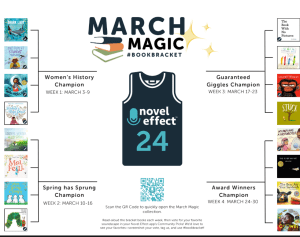
Always on the lookout for innovative ways to make reading magical, I introduced Novel Effect to my classroom this year. This app adds soundscapes to stories, creating an immersive reading experience. I was thrilled to be asked to serve as an ambassador for Novel Effect, which provided me with a free year’s subscription and access to an online community of educators. This community inspired us to participate in the March Magic book bracket, a global event where students read and voted on their favorite books. The excitement and engagement this activity generated were truly phenomenal. * I have the free app for the upcoming school year. I will be happy to visit classes to share the Novel Effect magic.
 

                                               Brigitte’s Summer Reading Challenge

To maintain students’ interest and engagement in reading over the summer, our school has implemented Brigitte’s Summer Reading Challenge. This program is especially important for students who struggle with reading, as it helps prevent the “summer slide” and keeps their skills sharp. The challenge encourages students to read a certain number of books over the summer, with incentives such as prizes for those who meet their goals.

Incorporating fun and motivating elements, the summer reading challenge makes reading a part of students’ daily routines even when school is out. Whether it’s through reading logs, book reviews, or creative projects, the challenge offers various ways for students to engage with their books and share their experiences. Prizes, ranging from small trinkets to larger rewards like gift cards or a special recognition ceremony, add an extra layer of motivation.

                                                               The Joy of Reading

Making reading fun throughout the year is a journey filled with creativity, connection, and joy. Whether through reading aloud, global collaborations, creative projects, innovative apps, or advanced assessment tools like Amplify, my goal is to create an environment where students look forward to reading and see it as an adventure. The smiles on their faces, the excitement in their voices, and the pride in their achievements are the greatest rewards for me as a teacher. Here’s to many more years of joyful reading adventures.


                                                    Reading with Puppies

                                                                A dream prototype for OJCS!

Just imagine if we had such a program at OJCS. I believe our reading scores would improve tremendously. We should have tried this before all the renovations.

Learning from my colleagues at parent conferences

I have always loved getting a chance to talk with parents about their children. We’ve been doing conferences with our teaching team. It’s always nice to have good conversations about the children.

This year, it struck me how impressed and happy the parents were with their children’s ability to read in all three languages and speak all three languages. Ada and Efi told parents how students use complex sentences in Hebrew and French. I realized that I have been too easy on the students in journal writing. I expect a sentence or two each day, and that is about it. I have to encourage and help some students think of ideas. A few parents admitted the students don’t enjoy journal writing. I had no idea how much the children were doing with their other teachers. Efi encouraged me to raise the bar and make it more challenging for the classes.

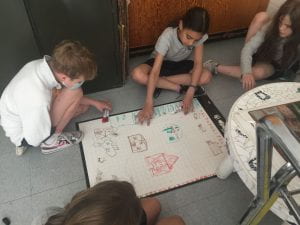
As I sat in the conferences with parents and talked with my partners during the breaks, I started to reflect and change up some of my teaching plans for writing. I thought about previous years in Grades 3 & 4. My students wrote more on topics they were interested in. This week, we read a story about a dream house, and I let the students draw their dream house and describe it in writing. The students were excited and wrote more than they had all year.


As a class, we even talked about writing on topics of interest to us. The students admitted it was much more fun, and yes, I am already thinking of Grade One passion projects. I am loving how the students are so interested in each other’s work displayed in class.

During the conferences, we discussed the goals the children chose earlier in the year. We discussed adding some academic goals into the mix this term. I will meet with my students to incorporate specific reading, writing, and math goals. I will let you know how that goes.

It is easy to get caught up in your teaching and curriculum and not have enough time in the day in the schedule. We need to stop and learn all the things our teaching teams do. It might even connect with your curriculum. We also need to appreciate how hard it is to work and learn in three languages each day.

                                                                                 #We Learn Better Together

Documenting Learning For Silvia

In the Fall of 2018, our school launched class blogs. Each grade shared class happenings and updates on the class blog. Our school also launched a consultancy with Silvia Tolisano at the same time. Her book Documenting the Learning, co-written with Janet Hale, is an extensive guide on how to make learning visible, meaningful, and shareable through blogfolios. A cohort of teachers spent time with Silvia learning how to capture and document student learning through their blogs. 

This cohort quickly became blogging experts and shared their learning with the rest of the teachers on staff. In January, I was fortunate to welcome Silvia and the cohort of teachers into my classroom. I had the opportunity to watch how they documented the learning happening in my Grade 3 class.

 The amount of information and insight gained into my students’ learning in just one lesson was amazing.

  Take a look at the Blog Posts Below

Bethany

Ann-Lynn

Josh

Chelsea

Keren

Melissa

Shira

In July 2019,  Silvia Tolisano was a presenter at the conference, and my colleague Lianna Krantzberg and I attended her workshop on Digital portfolios and Documenting learning. She suggested that if teachers want their students to use blogs to document their learning. The teachers should document their learning through a blog. This statement got me thinking. My colleague, Lianna started a professional blog at the airport on the way home from the conference. A week later, my colleague Josh Ray convinced me to start my blog. It has been instrumental in reflecting on my learning and growth as a teacher. Silvia was our positive mentor, cheering us on from the sidelines. She answered all our questions and got us to share our learning through our blogs. 

 I have launched student blogfolios with my classes over the last three years. The students enjoyed documenting their learning. Silvia was right! I have seen firsthand how students step up their game and write more, care more, and take more pride in their work using blogfolios. They love the idea that more people will read their work rather than just their teacher. I get it, as I feel the same way about my professional blog. I choose my words carefully and put more care into my work.

I know the students take ownership of their work. Blogfolios are the places students can ponder questions, record reflections, and talk about what they learned during the process. Of course, it will also be the spot to showcase final projects, writing, and activities.

This platform lets teachers personalize learning and enrich students. The beauty of writing posts, making videos, and taking pictures, is that students will be in charge of how far to take their learning. It will help us hit some of our school’s north stars.

Students learn more when they think and reflect on their work. I read so much these days about digital portfolios for students in high school and how crucial it is for learning. The fact that our school launches blogfolios at the elementary level is terrific. We teach our students how to take ownership of their learning at a young age which will serve them well in their academic careers. I have seen firsthand how motivated and engaged students are in posting work for the world to see. The extra effort goes into every assignment. The Grade 4-8 students have blogfolios, and this year Grades 2 &3 will launch blogfolios too. I am excited about the positive effect this will have on our students.

Silvia passed away in March 2021. I am sad to have lost such a positive teacher and mentor. Fortunately, I have her book and blog posts as my guide. We will be documenting our learning at OJCS the way Silvia taught us.

Documenting Learning

Each year at my school, the OJCS teachers choose a professional growth project. This project should be in an area where teachers would like to grow and improve their craft. I decided to focus on teaching my students how to document their learning as my growth project. I have launched student blogfolios during the last couple of years. I  helped my students populate their blogfolios with projects, speeches, and Innovation Day projects. 


This year I wanted to teach my students to take greater ownership of their learning, and what better way to do it than by documenting the process as it was happening. The head of the school, Dr. Jon Mitzmacher, suggested I focus my project on a specific teaching unit in the Spring. I met with our teaching and learning coordinator, Melissa Thompson, to brainstorm possible ideas for such a unit. We settled on a Social Studies unit, and I started to get excited about planning the cross-curricular lessons. Teaching at a trilingual school has time challenges. I have roughly eleven and a half hours a week with each class to teach: English, Science, Math, and Social Studies. The trick is to get the students excited and engaged with a cross-curricular approach. As I walked back to my class, I had the whole unit planned in my head. 

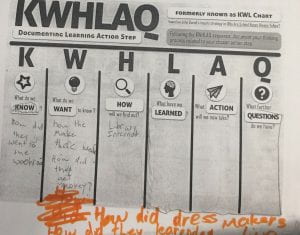
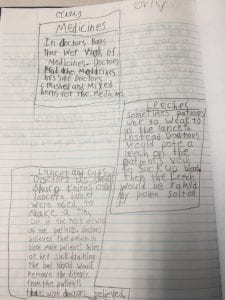
I planned a unit on Early Settlers in Upper Canada in the 1780-1850 time period. I decided to teach my classes how to document their learning as we went through another unit. Remote and Hyflex learning put a hold on this in early 2022. The classes started the unit at the beginning of May. The students filled out the KWHL chart before we began. They knew a little about the period and had many questions. We watched films from the NFB(National Film Board of Canada) and read stories about Early settlers. Ms. Brigitte, our school librarian, brought a bin of books to help us begin the research process. 

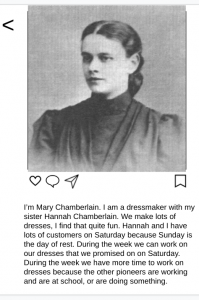
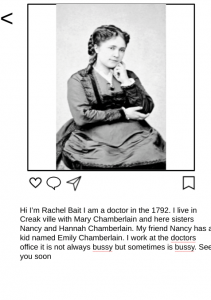
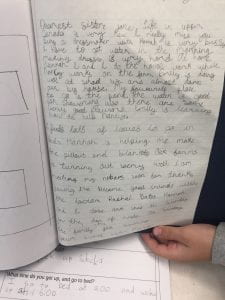
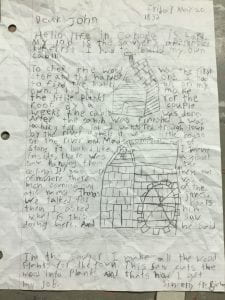
Each class became a village, and the students chose an occupation for their villagers. The children became more interested; the research began. Students searched 1800-era marriage records for the Ottawa area to find villagers’ names. As a class, we discussed different options for presenting our research. We settled on writing a blog post about our villager, writing a letter to a relative describing life in Canada, and writing two Instagram posts. We also thought it would be fun to map the village complete with coordinates. The area and perimeter of the buildings in the village had the students calculating and having fun.


The classes designed 3D models and started constructing the buildings found in the village. Some of my students were less than enthusiastic about this part of the project. They had constructed buildings for an Ideal city project we did earlier in the year. I decided to talk with the classes and see if students would like the choice of how to construct the buildings. I brought up the idea of using Minecraft to make the buildings. Student voice and choice in a project will bring another level of engagement to a project. As a teacher, this type of engagement in work is fun to observe. Students worked on their Minecraft buildings over the weekend, and it wasn’t even part of a homework assignment.


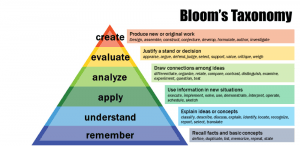
Projects like this have the students self-directed and busy as they work on the different assignments. The next step in this cross-curricular unit is to take it to the top level of Bloom’s Taxonomy; create. Students have the choice to create a newspaper, a podcast, or a news report about life in the early settler village. There is excitement in the air, and the ideas are flowing as the classes brainstorm the best way to complete the project. Stay tuned for the final reveal.

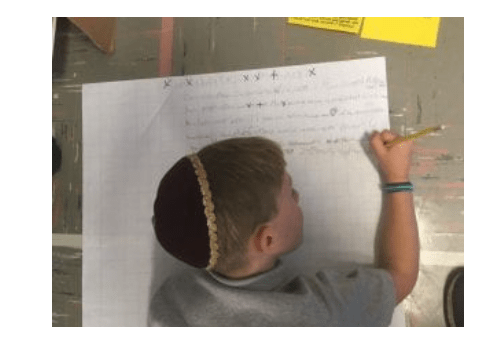
How did the documenting as learning go? The students took lots of pictures and videos. Now I  have to get everything onto the blogfolios. At the grade three-level, the teacher is the one to populate the blogfolios. It is more difficult to upload documents, pictures, and videos on iPads. The two classes share 15 iPads for English and Hebrew, and it remains a challenge to have the time to update the blogs.

Students reflected on the learning that took place in class discussions. The students will annotate the pictures and reflect once the work is uploaded. I feel strongly about documenting and reflecting on learning. It helps the students be more mindful of the learning process. I liken this to the Teacher professional growth process. The teacher can learn and grow if they want to do the work. It is the same with the children. Teaching students to document their learning would flow right into student-led conferences. It would be a game-changer for learning at this school. Students need to start the documentation process in their younger years. Our North Stars are within reach. 

                           #We own our own learning                                        #There is a floor, but no ceiling